Round head cross tapping screw-gb845
Material: stainless steel 304316, grade 8.8 high strength and grade 12.9 high strength
Product standard:gb845
It can also support non-standard customization.
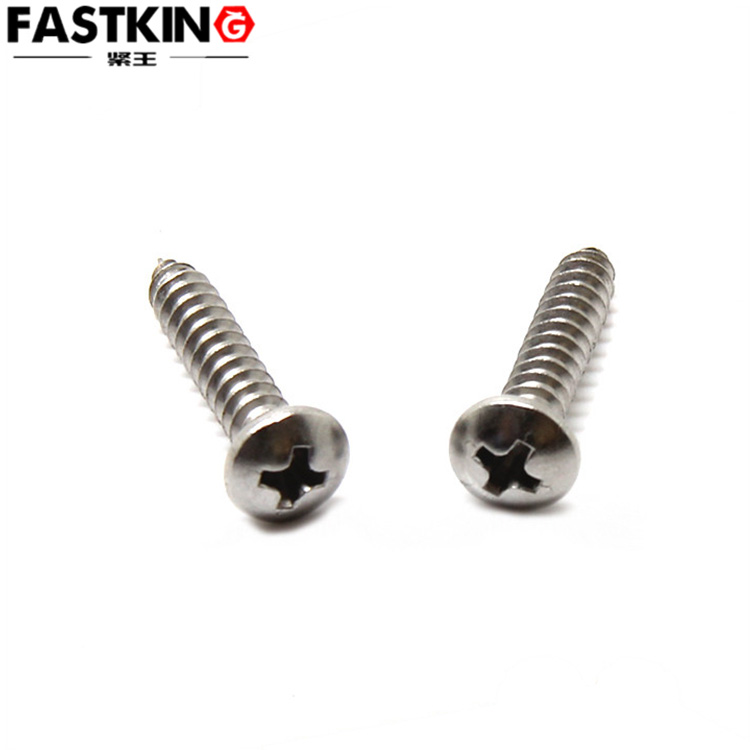
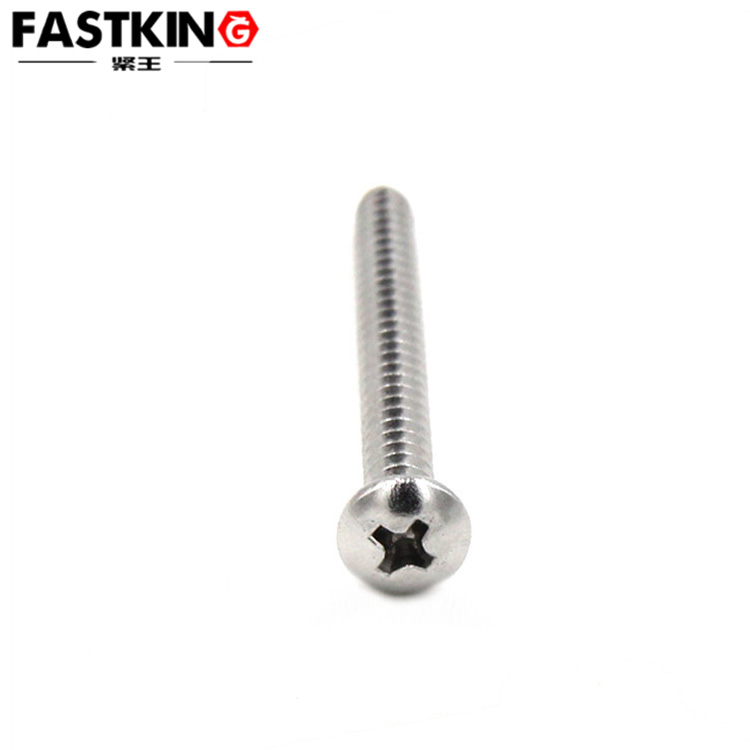
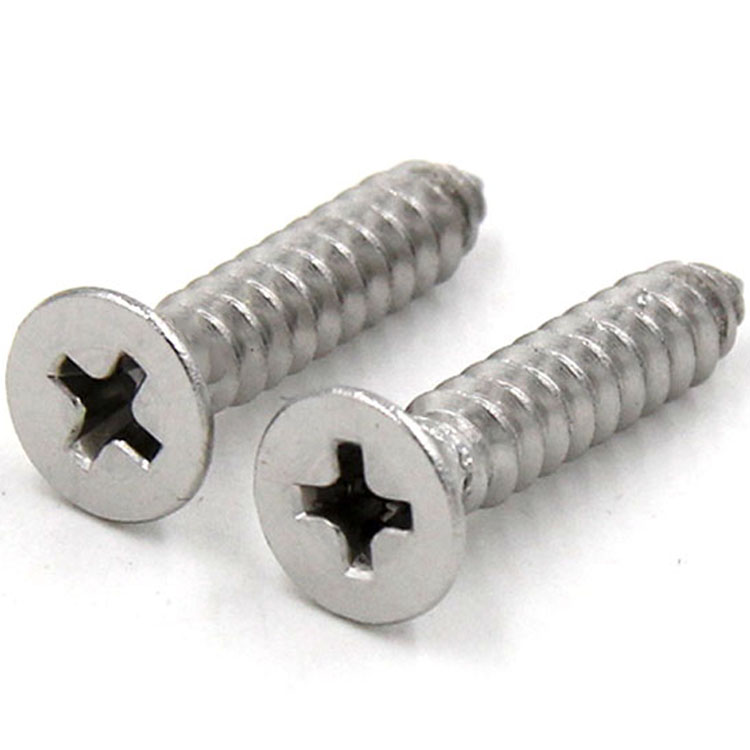
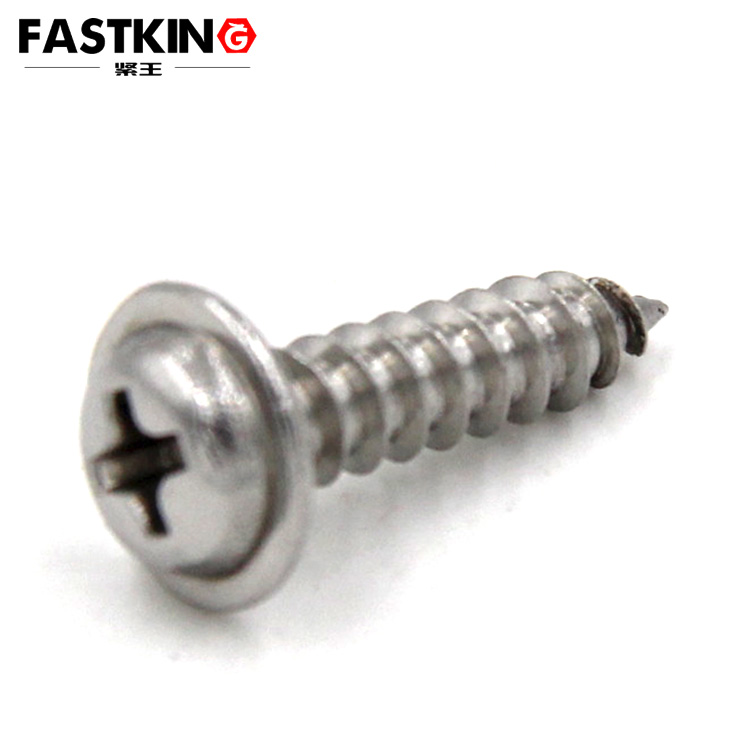
The Pan-Head Phillips Self-Tapping Screw (commonly known as "Yuan Gong") is a "basic model" in the self-tapping screw family. Its design strictly complies with the national standard GB/T 845-1985, specifying thread sizes (ST2.2-ST6.3), head dimensions, and Phillips slot types. Featuring a semicircular head with a Phillips slot, a shank with triangular self-tapping threads, and mostly an A-type sharp point—this sharp-point design acts like a "drill bit," easily penetrating soft materials such as wood, plastic, and thin metal sheets. It requires no nuts and can be installed by a single person.
Widely used in daily scenarios, this screw secures wooden wardrobe back panels, assembles plastic toy casings, and connects file cabinet drawer slides, all leveraging its convenient self-tapping capability. Compared to other screws, its key advantage lies in "strong versatility": both professional workers and DIY enthusiasts can operate it with a standard Phillips screwdriver. Additionally, its rounded head prevents hand scratches, ensuring higher safety.
The Hardened Pan-Head Phillips Self-Tapping Screw is an "enhanced version" of the basic model, developed to address the pain points of ordinary self-tapping screws—such as difficult threading and thread stripping—when used on hard materials. Manufactured from 45# carbon steel or SCM435 alloy steel, it undergoes "quenching + tempering" heat treatment, achieving a hardness of HRC 35-45, significantly higher than that of ordinary self-tapping screws (HRC 25-30). Retaining the classic pan-head Phillips design, it features a thicker shank thread and sharper thread profile, enabling fast thread cutting in harder materials like aluminum alloy profiles and thick plastic sheets without thread deformation due to excessive resistance.
Ideal for high-strength connection scenarios: it securely "bites" into metal profiles when fixing aluminum alloy door/window frames, preventing loosening after long-term use; when connecting automotive interior plastic parts to metal brackets, its high-strength property resists vibrations during vehicle operation, avoiding component detachment. However, note that a matching screwdriver is essential—due to its high hardness, an incompatible screwdriver size may cause "cam-out" (screwdriver slipping), reducing installation efficiency.
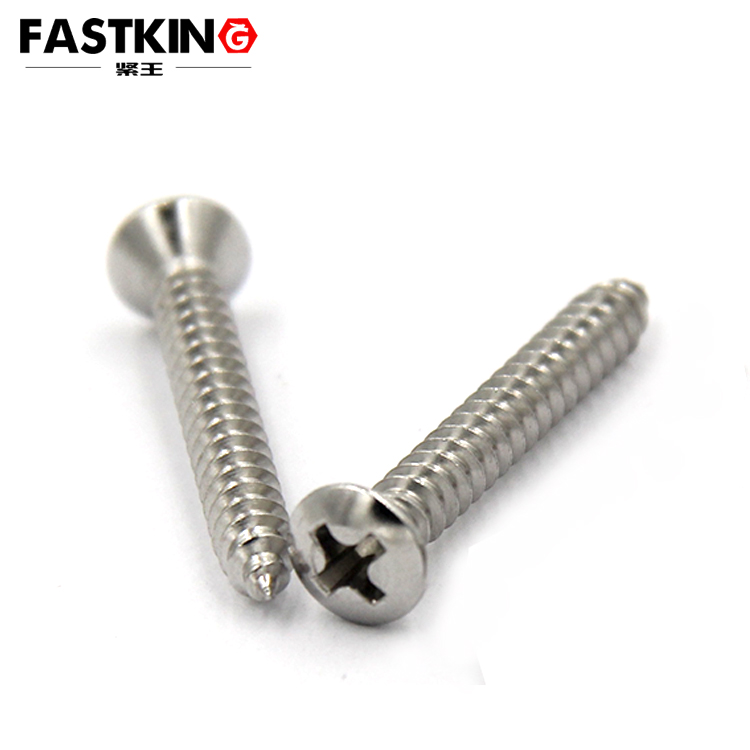
The Stainless Steel Self-Tapping Screw’s core competitiveness is "corrosion resistance," with mainstream materials including SUS304, SUS410, and SUS316. SUS304 Stainless steel screws are non-magnetic and moisture-resistant, suitable for securing internal components of kitchen appliances (e.g., dishwashers, disinfection cabinets) as they resist oil and moisture erosion. SUS410 stainless steel balances strength and rust resistance, commonly used for outdoor furniture connections (e.g., stainless steel railings, garden wooden chairs) and resistant to rust even under wind and rain. SUS316 stainless steel, resistant to strong acids and alkalis, is an "exclusive screw" for medical equipment and food machinery, maintaining stable performance in harsh disinfection environments.
Available in flexible head styles (pan head, round head, countersunk head) to meet surface flatness requirements: for example, round-head models are used for installing bathroom fixtures (e.g., shower brackets) to avoid scratch-inducing protrusions; pan-head models secure outdoor billboards, balancing strength and aesthetics. Compared to ordinary carbon steel self-tapping screws, stainless steel variants offer a 3-5x longer service life. Although the purchase cost is slightly higher, they reduce long-term maintenance and replacement hassle.
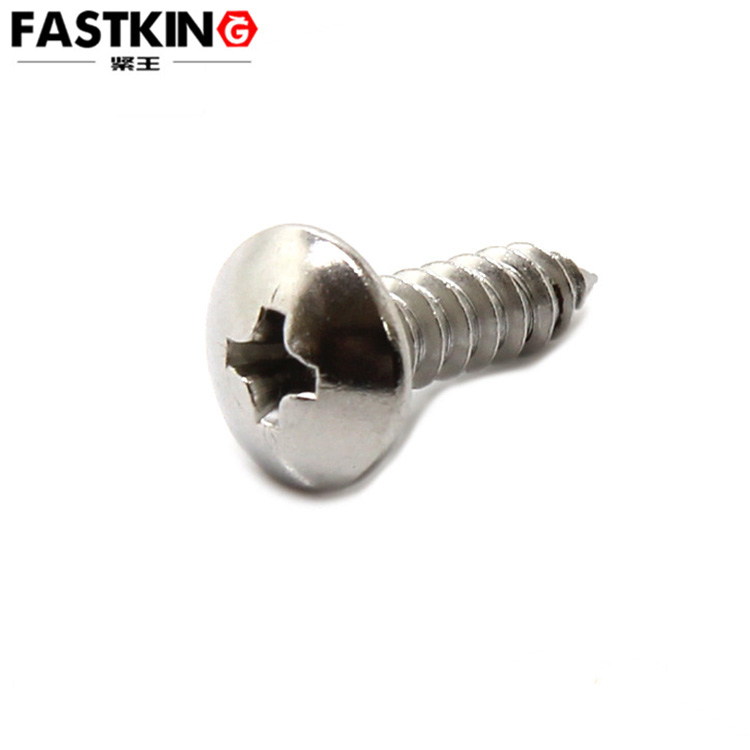
The Truss-Head Phillips Self-Tapping Screw is a "balanced option," with a head shape between pan head and countersunk head—semicircular top, sloped sides, and a larger diameter than pan heads. When tightened, the head only slightly protrudes, eliminating the need for precise countersink alignment (a drawback of countersunk screws) while saving more space than round-head screws. Equipped with self-tapping threads and mostly a B-type cutting point (higher cutting efficiency than sharp points), it suits medium-hard materials like ABS plastic and thin aluminum sheets.
Its advantages are particularly evident in electronic devices and office furniture: assembling plastic casings of routers and set-top boxes requires non-protruding heads for portability, which the truss-head design fulfills; when fixing office desk partitions, its sloped head fits flush with the board surface, ensuring aesthetics while providing sufficient clamping force. Additionally, the deeper Phillips slot prevents screwdriver slipping during installation, making it ideal for mass assembly and significantly improving production efficiency.
Though each of these four self-tapping screws has distinct focuses, they collectively embody the value of "small components solving big problems." Selection should be based on comprehensive considerations: material hardness (basic model for soft materials, hardened version for hard materials), usage environment (stainless steel for humid/outdoor conditions), and surface flatness requirements (truss-head for partial flatness without full countersinking). Understanding their characteristic differences ensures each screw maximizes its effectiveness, delivering reliable guarantees for various connection scenarios.